Published by FabNest Technologies | Insights
If you read our previous article on what 3D printing is, you now know why it's become such a useful tool for businesses; fast, flexible, and accessible without large upfront costs.
But here's something most people in the 3D printing space won't tell you: it isn't always the right answer. In fact, recommending 3D printing for the wrong application is one of the most common and costly mistakes made by businesses exploring manufacturing for the first time.
This article is for anyone who has a part, product, or component they need made — and wants to understand when to use 3D printing, and when to reach for something else entirely.
The Honest Truth About 3D Printing
3D printing is a brilliant tool for specific situations. It is not a universal solution. Like any manufacturing process, it has a sweet spot — and outside of that sweet spot, other methods will serve you better, faster, or cheaper.
The challenge is that 3D printing gets a lot of attention, so it tends to be the first and sometimes only option people consider. That's where things go wrong.
When You Should Think Twice
1. When You Need Thousands of Identical Parts
3D printing shines at low volumes. One part, ten parts, even a few hundred. But if you need the same part produced in the thousands, traditional manufacturing methods like injection moulding become significantly more cost-effective per unit.
The reason is simple: injection moulding has a high setup cost, the mould itself, but a very low cost per part once that mould exists. 3D printing has almost no setup cost, but each part takes roughly the same amount of time and material regardless of how many you make. At high volumes, those individual costs add up quickly.
What to use instead: Injection moulding for plastics, die casting for metals (both designed for high-volume), consistent output.
2. When the Part Will Be Under Heavy, Repeated Stress
Most 3D printed parts are strong enough for prototyping, light-duty use, and functional testing. They are not always the right choice for parts that will carry significant structural loads, experience repeated mechanical stress, or operate in extreme conditions day after day.
This doesn't mean 3D printed parts are fragile, far from it. But the direction in which layers are built affects how a part behaves under load, and a part that looks identical to a machined component may not perform identically under pressure.
What to use instead: CNC machining or metal fabrication for parts that need to be cut or formed from solid stock, delivering the material properties and structural consistency that high-stress applications demand.
3. When Surface Finish Is Critical Right Off the Machine
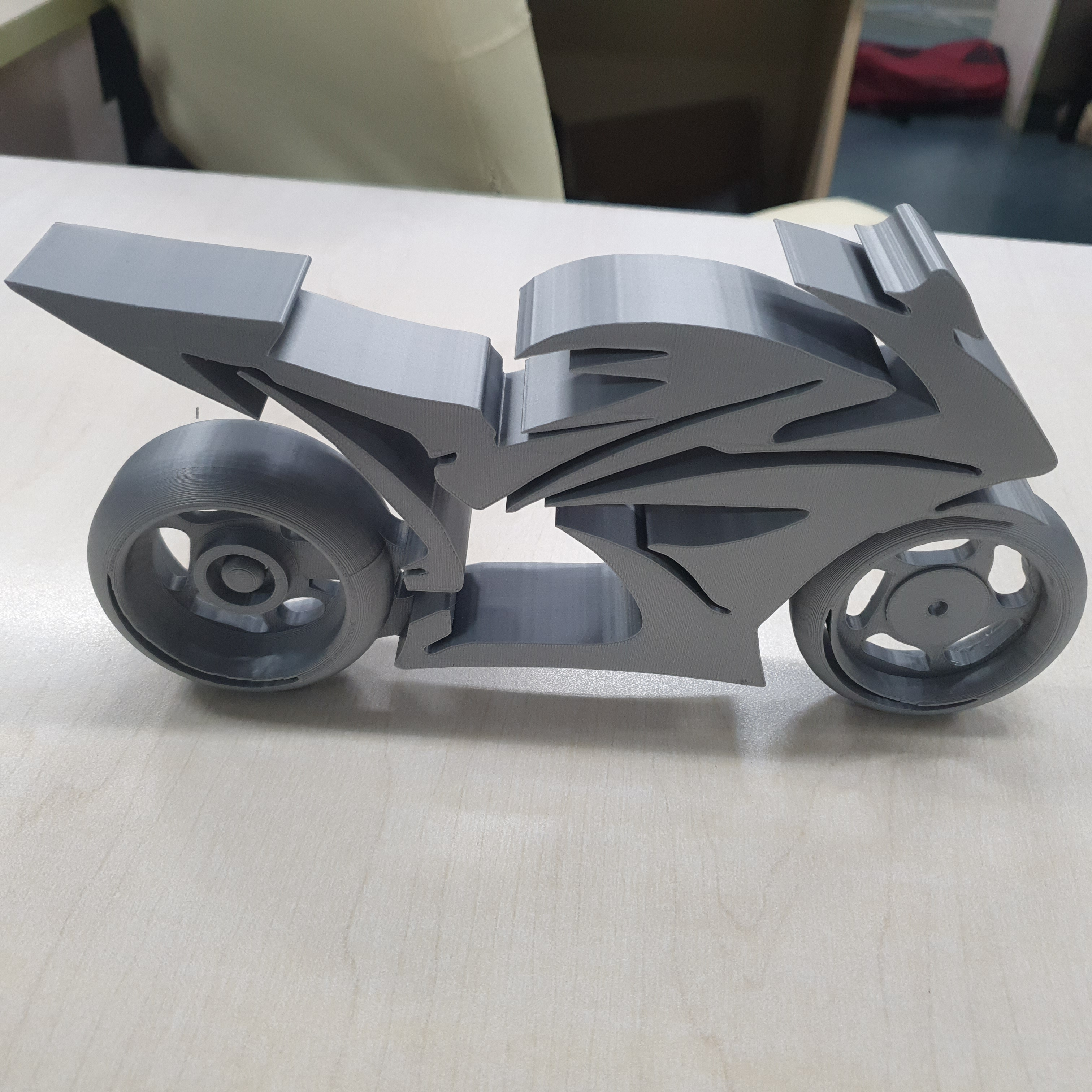
Fresh off a 3D printer, most parts have visible layer lines, subtle ridges left behind from the additive process. For prototypes, internal components, or parts that will be painted or coated, this is rarely a problem. But if your final part needs a smooth, polished, or cosmetically perfect surface straight out of production, standard 3D printing may not get you there without additional finishing work.
What to use instead: For high surface quality on plastic parts, vacuum casting produces smooth, production-grade finishes. For metal components, machining and grinding can achieve very tight tolerances and fine finishes.
4. When You're Working With Certain Materials
Not everything can be 3D printed. If your part needs to be made from a specific metal alloy, food-grade material, or a certified engineering plastic that isn't available in filament form, 3D printing may simply not be an option — or may require specialist equipment that changes the economics significantly.
What to use instead: Metal fabrication, CNC machining, or traditional casting depending on the material and geometry required.
5. When Cost-Per-Part Matters More Than Speed
For simple, flat, or sheet-based parts; brackets, panels, mounting plates, laser cutting or sheet metal work is often faster, cheaper, and structurally more appropriate than 3D printing. It's a common mistake to reach for 3D printing when the part is actually a straightforward cutting job.
What to use instead: Laser cutting or sheet metal fabrication for flat profiles and sheet-based components.
So How Do You Know Which to Use?
The honest answer is: it depends on the part, the material, the quantity, the application, and the budget. Here's a simple starting point:
| Situation | |
| One to a few hundred parts, complex geometry | 3D printing |
| Thousands of identical plastic parts | Injection moulding |
| Metal part under structural load | CNC machining or fabrication |
| Flat or sheet-based component | Laser cutting or sheet metal |
| High surface quality, low volume | Vacuum casting |
| Design isn't final yet | Start with 3D printing to test |
This isn't a rigid rulebook, manufacturing decisions involve trade-offs, and the right choice for one business may not be right for another. But it's a useful starting frame.
What This Means for You
At FabNest, we work across all of these methods; 3D printing, CNC machining, fabrication, laser cutting, and vacuum casting. That matters because our job isn't to sell you a 3D printing service. It's to help you get the right part made, the right way, at the right cost.
If you're not sure which manufacturing approach suits what you need, that's exactly the kind of question we help answer before you commit to anything.
Book a free consultation → fabnesttechnologies.co.ke/contact
FabNest Technologies | Solai Rd., Industrial Area, Nairobi
info@fabnesttechnologies.co.ke | www.fabnesttechnologies.co.ke